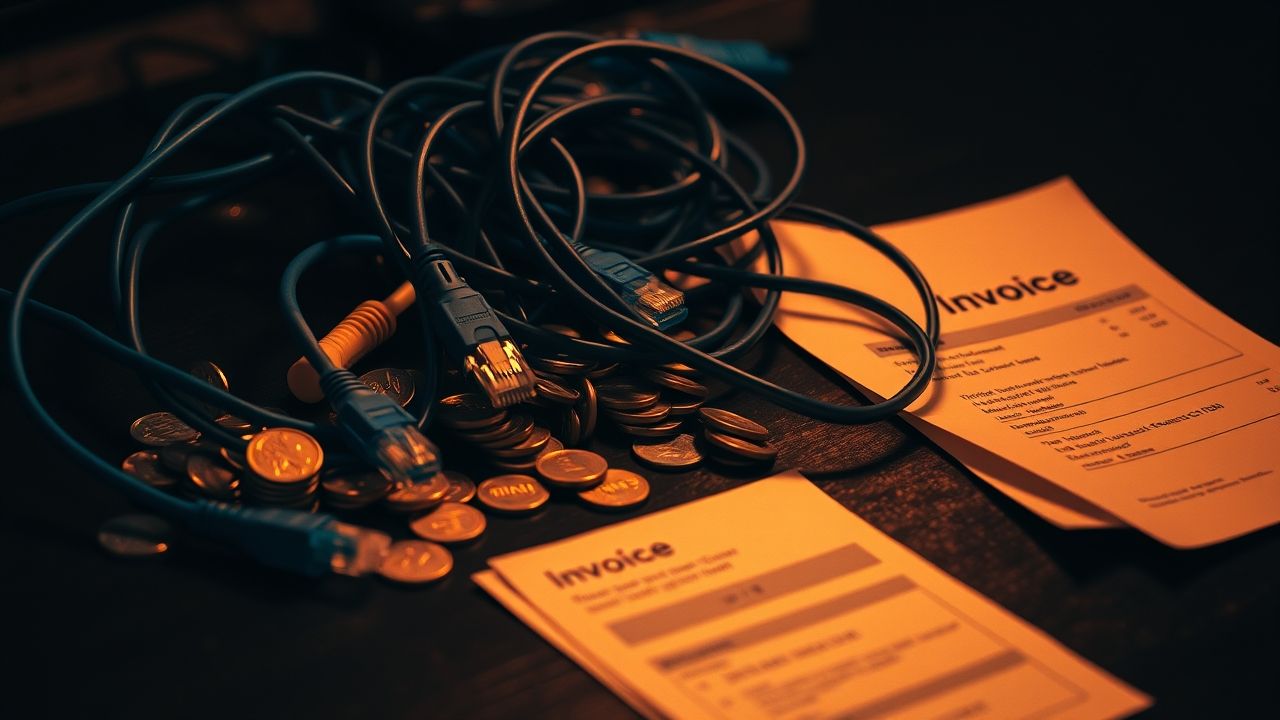
You can stand up a scraper this afternoon. Fetch a page, write a few selectors, print some JSON, ship it. It feels free, and that feeling is exactly the trap. The build is the cheap part. The bill comes later, every month, and it never quite stops.
The sticker price is a lie
The reason homemade scraping looks cheap is that you only ever see the first day of it. An afternoon of work, no invoice, data in your database by dinner. Filed under “free.”
But a scraper is not a thing you buy once. It is a thing you keep. And the part you budgeted for, the build, turns out to be the short bar in a much taller stack.
Then the meter starts
The day after launch, the site you scrape goes back to being someone else’s property. They redesign on their timeline, rename classes for their own reasons, add a bot check because a different scraper annoyed them. Every one of those is a bill addressed to you:
- Maintenance that never converges. You fix the selector tonight; the site moves again next quarter. It is not a purchase, it is rent.
- The bot-wall arms race. The moment a source starts blocking, you are buying proxies, running a headless browser farm, and losing evenings to a fight that has nothing to do with your product.
- On-call. The worst failures are silent: a feed goes half-empty and your numbers are quietly wrong for a week. Now you are paying in trust, too.
- Opportunity cost, the biggest line item and the one nobody writes down. Every hour spent nursing a scraper is an hour not spent on the thing your users actually hired you to make.
A scraper is not an asset you own. It is a subscription you pay in engineering time, and the web sets the price.
So people reach for tools, fairly
Nobody wants that bill, so a whole market grew up to soften it, and a lot of it is genuinely good at what it does. It helps to be clear-eyed about what each kind of tool actually takes off your plate, and what it quietly leaves on it.
- General scraping APIshand you a page’s HTML without you running the browser. That solves fetching. It does not solve the part where you still have to parse that HTML into fields and keep the parser alive when the markup moves.
- Proxy and browser networks sell you a way in: residential IPs, a real browser, a rotation strategy. Powerful, and priced like it. You are renting muscle, then still building the whole extraction and contract layer on top yourself.
- No-code scrapers get a non-engineer to a spreadsheet fast. They tend to hit a ceiling the moment you need reliability, a stable schema, or a login-walled source.
These are the right answer for plenty of jobs. The pattern worth noticing is what they have in common: each one hands the fragile, forever part, turning a specific site into a stable shape and keeping it that way, back to you.
We sell the contract, not the scraper
maviapi is built around a different unit. You do not get a browser, a proxy pool, or a page of HTML. You get a per-site API with a contract: one stable URL, clean JSON with named, typed fields, and a promise that the shape stays put even as the site behind it changes. Keeping that true is our job, on our clock, not a page in your on-call rotation.
Roll your own scraper you maintain | Scraping / proxy tools fetching, rented | maviapi a site as an API | |
|---|---|---|---|
| Time to first clean JSON | Hours to days | Fetch is fast, parsing is yours | One call, minutes |
| Who parses the page | You do, per field | Still you | Already done, server-side |
| Bot walls and browsers | Your problem | Sold to you as a service | Handled behind the API |
| When the site redesigns | Your scraper breaks | Your parser breaks | We repair it, shape holds |
| The stable shape you code against | Whatever you scraped today | None guaranteed | A versioned contract |
The honest test: if the site you need changed its layout tonight, whose weekend does it ruin? With a scraper or a raw fetching tool, yours. With a maviapi endpoint, ours, and you find out only because a x-maviapi-version ticked up in your logs.
The math that built us
None of this means you should never write a scraper. If a source is stable, public, and you need it once, a fifty-line script is the right tool and you should go write it. Build-versus-buy is a real decision, not a slogan.
The calculus flips the moment the data matters on an ongoing basis. When an endpoint sits in your product’s critical path, the recurring bill, the maintenance, the arms race, the 3am pages, dwarfs whatever a hosted API costs, and it is paid in the one currency you can never buy more of: your team’s attention. We would rather be the team that obsesses over the messy web full time so that everyone else gets to treat it as a dial tone.
Browse the catalog to see the sites already behind a stable API, or request one for the source that keeps waking you up. The cheapest scraper you will ever own is the one you get to delete.
Started maviapi after one too many 2am scraper fires. Writes about the product, the bets behind it, and the parts of running an API company nobody warns you about.
More from Musab